If you are torn between a sparkling canal view and a simpler inland lifestyle in Pompano Beach, you are not alone. Waterfront living delivers a one-of-a-kind vibe, yet it also comes with higher purchase prices, insurance considerations and maintenance. Inland neighborhoods can stretch your budget further and reduce risk, but you give up dockside convenience. This guide breaks down real price bands, flood and insurance realities, boating access, HOA differences, and who each option tends to fit best so you can move forward with confidence. Let’s dive in.
Quick comparison: price and value
Waterfront single-family homes in Pompano Beach usually command a large premium over inland properties. Recent local waterfront market watches show typical median prices for ocean-access single-family homes in roughly the low seven figures, while citywide and inland medians are generally much lower. Market trackers often show citywide values in the mid 300s to mid 400s, and many inland single-family medians in the low to mid 200s through 500s depending on neighborhood and timeframe.
Beachfront and Atlantic-front condos on A1A also price above inland condos. Snapshots of the “Beach” area often land near the upper five to low six figures for medians, while many inland condos are notably below that. Always verify with up-to-date MLS data for a specific address.
Here is a simple way to frame the ranges you will encounter:
| Property type | Typical price band | Notes |
|---|---|---|
| Waterfront single-family (canal/Intracoastal, ocean access) | About $1.25M–$1.8M median range (varies with inventory) | Low inventory can swing medians. Verify current comps. |
| Beachfront/Atlantic-front condos (A1A) | About $599k–$635k median in recent snapshots | Premium for ocean views and amenities. |
| Inland single-family and condos | About $200k–$500k for many inland medians; citywide medians mid $300k–mid $400k | Wide spread by neighborhood and product type. |
Numbers move quickly in South Florida. Treat these as directional ranges and confirm the latest figures before you write an offer.
Where each option concentrates
Pompano’s eastern edge along A1A is where you find beachfront and oceanfront condo towers. If you want sand, sunrise views and resort-style amenities, this is the natural focus area. Expect elevated HOA dues that reflect beachfront maintenance and shared facilities.
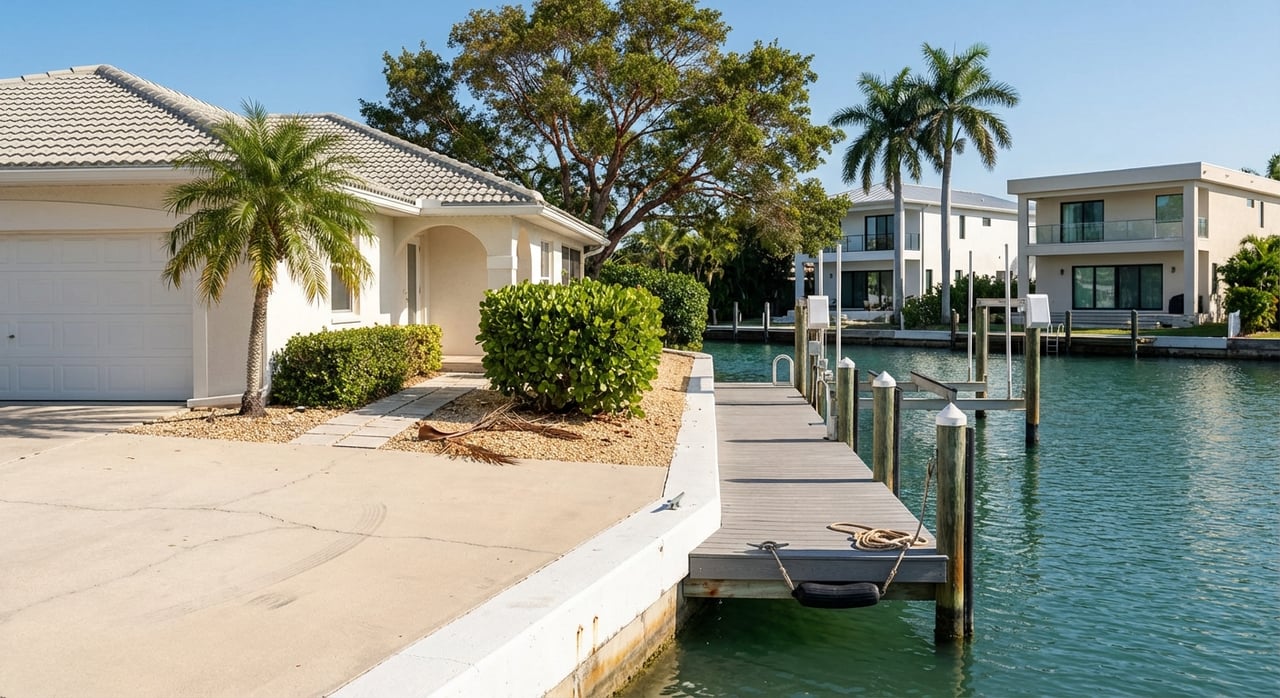
Just west of the barrier island, canal and Intracoastal neighborhoods such as Harbor Village, Pompano Isles, Cypress Harbor and Garden Isles concentrate single-family homes with private docks. Many lots advertise ocean access. Some corridors are “no fixed bridges,” which means larger vessels can reach the inlet without height restrictions. Others have fixed bridges that limit boat size.
Further inland, golf-oriented and conventional subdivisions like Palm Aire and other interior neighborhoods offer a broad mix of condos, townhomes and single-family homes at more approachable price points. You will still find pockets with flood exposure, so always check the specific parcel rather than assuming that inland equals no flood risk.
Boating access, docks and seawalls
If boating is a priority, focus on three practical checks: bridge clearances, water depth and seawall/dock condition. “Ocean access” with “no fixed bridges” often carries a higher price because you can reach the ocean faster and with larger vessels. If a canal route includes fixed bridges, verify the posted clearance against your boat height.
Not every buyer wants to own and maintain a dock. You can pair an inland or non-dock property with a dry-stack slip or marina membership. Local options such as the Hidden Harbour facility provide dry-stack storage and fueling so you can enjoy the water without a private seawall or lift. Explore nearby options using this local marina directory listing to understand availability and proximity from your target neighborhood.
Seawalls and docks require periodic repairs and sometimes replacement. Work often involves state and federal permits in addition to local building approvals, which can add time and cost. A practical primer on permitting considerations is available here if you want to go deeper on process and timelines: dock and seawall permitting insights.
Flood zones and insurance costs
Flood exposure is the biggest ongoing difference between many waterfront properties and most inland homes. If a property sits within a FEMA Special Flood Hazard Area (for example, Zones AE, AO or VE), lenders usually require flood insurance. Broward County offers an interactive flood map and parcel lookup so you can check a parcel’s designation and related details. You can also confirm the FEMA panel using the Flood Map Service Center.
FEMA’s pricing approach known as Risk Rating 2.0 now individualizes flood premiums based on factors like building elevation, distance to water and replacement cost instead of only the zone. That means two homes on the same street can have very different premiums. If flood costs matter to your decision, review FEMA’s overview of Risk Rating 2.0 and get a quote for the exact address before you submit an offer.
Homeowners insurance in South Florida has also been elevated relative to many parts of the country. Regulatory filings show shifting (recently moderating) conditions, yet premiums and hurricane deductibles remain a budgeting item to plan for. For context on the broader insurance environment, see this state-level regulatory filing reference and always get a carrier quote tied to the specific home.
How to check a property’s flood zone
- Look up the address in Broward’s interactive parcel flood map and note the zone.
- Pull the FEMA panel at the FEMA Flood Map Service Center for a second confirmation.
- Ask the listing agent for any Elevation Certificate and the current flood insurance declarations.
- Request a written flood quote from your insurer based on the property’s specifics (Risk Rating 2.0).
HOA, condo and maintenance differences
Many canal-front single-family homes in Pompano are not in large HOAs. You will be responsible for your structure insurance, landscaping and any seawall or dock maintenance. Budget for periodic marine work and inspections, as waterfront exposure can accelerate wear.
Condo buyers should understand the split between the association’s master policy (building and common elements) and your unit policy (HO-6). Florida law outlines baseline association insurance responsibilities. If you want to read the statute that governs these rules, review Florida Statutes, Chapter 718.111. Always request the association’s declarations, master-policy declarations page, budget, reserve study and recent meeting minutes, and ask about any planned assessments.
Who each option tends to fit
- Waterfront single-family (canal or Intracoastal): You want water views and your own dock, have a higher budget (often above $1 million), and accept higher insurance and maintenance.
- Beachfront condos on A1A: You want oceanfront living and amenities with shared maintenance, and you are prepared for higher dues and potential assessments in older towers.
- Inland single-family or condos: You want value, a lower purchase price, and typically less flood exposure, yet you will still confirm the flood zone address by address.
Before you tour: 6 things to check
- Flood and elevation: Run the Broward flood map lookup, confirm on FEMA MSC and request any Elevation Certificate.
- Insurance quotes: Get written homeowner and flood quotes for the exact property under Risk Rating 2.0.
- Dock, seawall and permits: Ask for permits, repair receipts and inspection reports; factor in potential marine maintenance. See permitting insights for process context.
- HOA or condo documents: Request the master-policy declarations, latest budget, reserve study and minutes; confirm any required inspections or recertifications under state rules (for 3-plus story condos, confirm SIRS and milestone status).
- Boating details: Verify bridge clearances, channel depth and whether any slip is private, deeded or HOA-controlled. Consider dry-stack options like Hidden Harbour.
- Claims history: Ask for prior insurance claims and current policy declarations to understand recent losses and coverage terms.
Choosing what fits you best
If your dream is breakfast on the dock and afternoon cruises to the inlet, a waterfront home can be worth the premium. Just plan for higher insurance, occasional marine work and the due diligence that comes with living on the water. If you want low-maintenance living and financial flexibility, inland homes and condos open more neighborhoods and price points while still placing you close to the beach and marinas.
Ready to compare real listings, run insurance numbers and map boating options to your lifestyle and budget? Connect with Judi Haynesworth for a tailored plan and a smooth path from preapproval to closing.
FAQs
What is the price gap between waterfront and inland homes in Pompano Beach?
- Recent snapshots show waterfront single-family medians around $1.25M–$1.8M, while many inland medians range from about $200k–$500k and citywide medians often land mid $300k–mid $400k.
How do flood zones affect insurance for Pompano Beach homes?
- Properties in FEMA Special Flood Hazard Areas typically require flood insurance, and costs vary under Risk Rating 2.0; check Broward’s flood map and the FEMA MSC for the exact address.
Where are ocean-access homes with no fixed bridges in Pompano Beach?
- Many are in Intracoastal and canal neighborhoods just west of the beach, including areas like Harbor Village and Pompano Isles, but always verify bridge clearances and depth for your vessel.
What condo documents should I review near the beach?
- Request the master-policy declarations, current budget, reserve study and meeting minutes, and review Florida’s condo insurance rules in Chapter 718.111.
I want boating without dock ownership; what are my options?
- Consider local marinas and dry-stack storage, such as Hidden Harbour, which can pair with an inland or non-dock home.
Do inland homes always avoid flood insurance in Pompano Beach?
- Not always; some inland pockets still fall within mapped flood zones, so confirm with Broward’s parcel flood tool and the FEMA MSC for every address.